Bringing the future of medical technology to the point of care.
Bioptive partners with clinicians, hospitals and pharmacies across our territories to deploy breakthrough AI-powered healthcare technologies, starting with Cardisio, our flagship cardiac-screening platform.
A medical‑technology distributor built for the AI era of healthcare.
Bioptive Ltd, headquartered in Nicosia and operating across the Eastern Mediterranean, the Gulf and South Asia, identifies, in-licenses and deploys next-generation medical technologies, with a focus on AI-enabled diagnostics that move clinical decision-making closer to the patient.
We partner with physicians, hospitals, medical diagnostic centers and pharmacies to bring the next generation of healthcare technology to the point of care. Cardisio, the world's first commercial 3D AI cardiac-screening platform, is the first product in our portfolio.
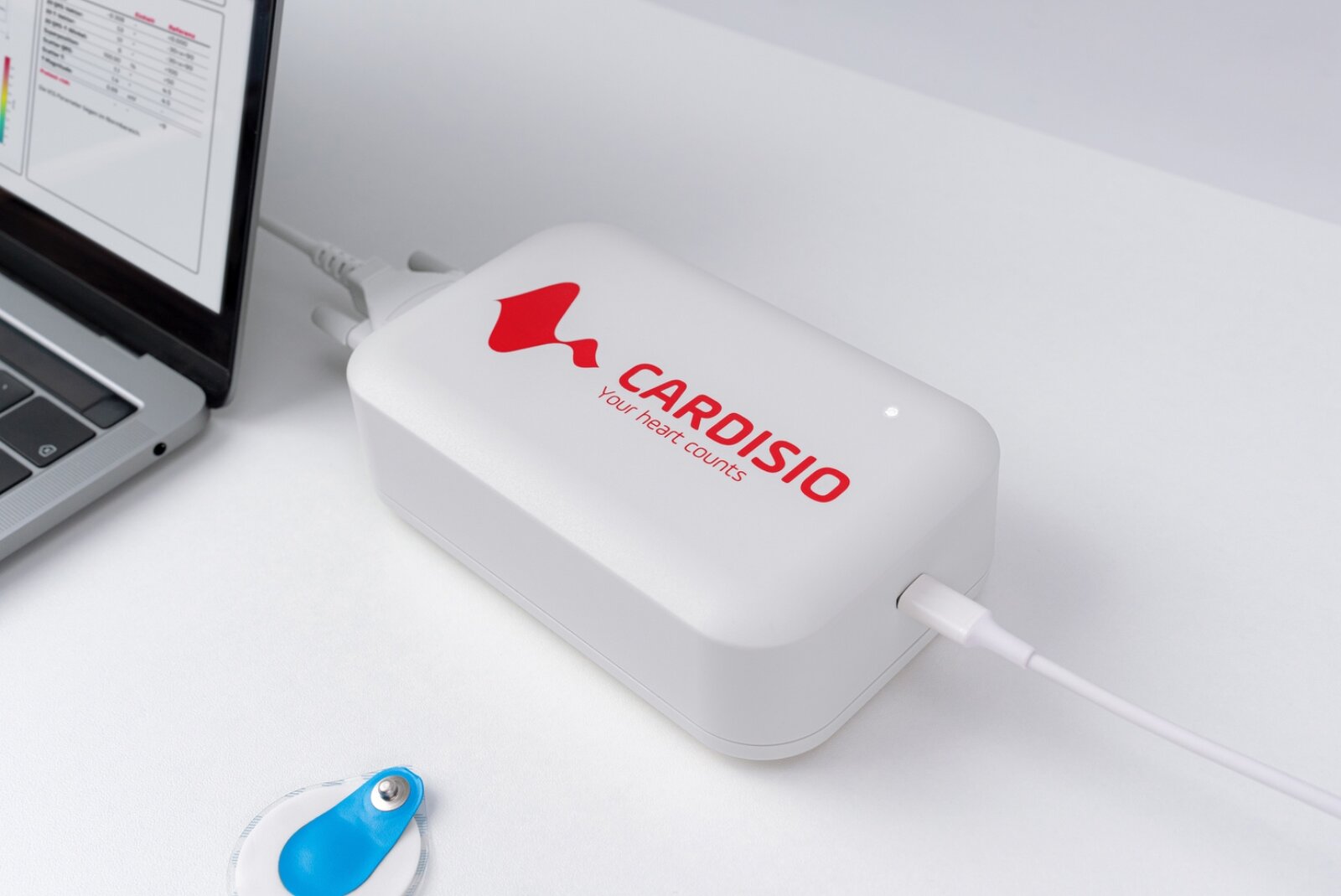
Cardisio is the first product Bioptive brings to market: a CE-certified AI cardiac-screening platform developed by Cardisio GmbH in Frankfurt. More AI medical technologies are on the way.
Why rely on 100‑year‑old technology?
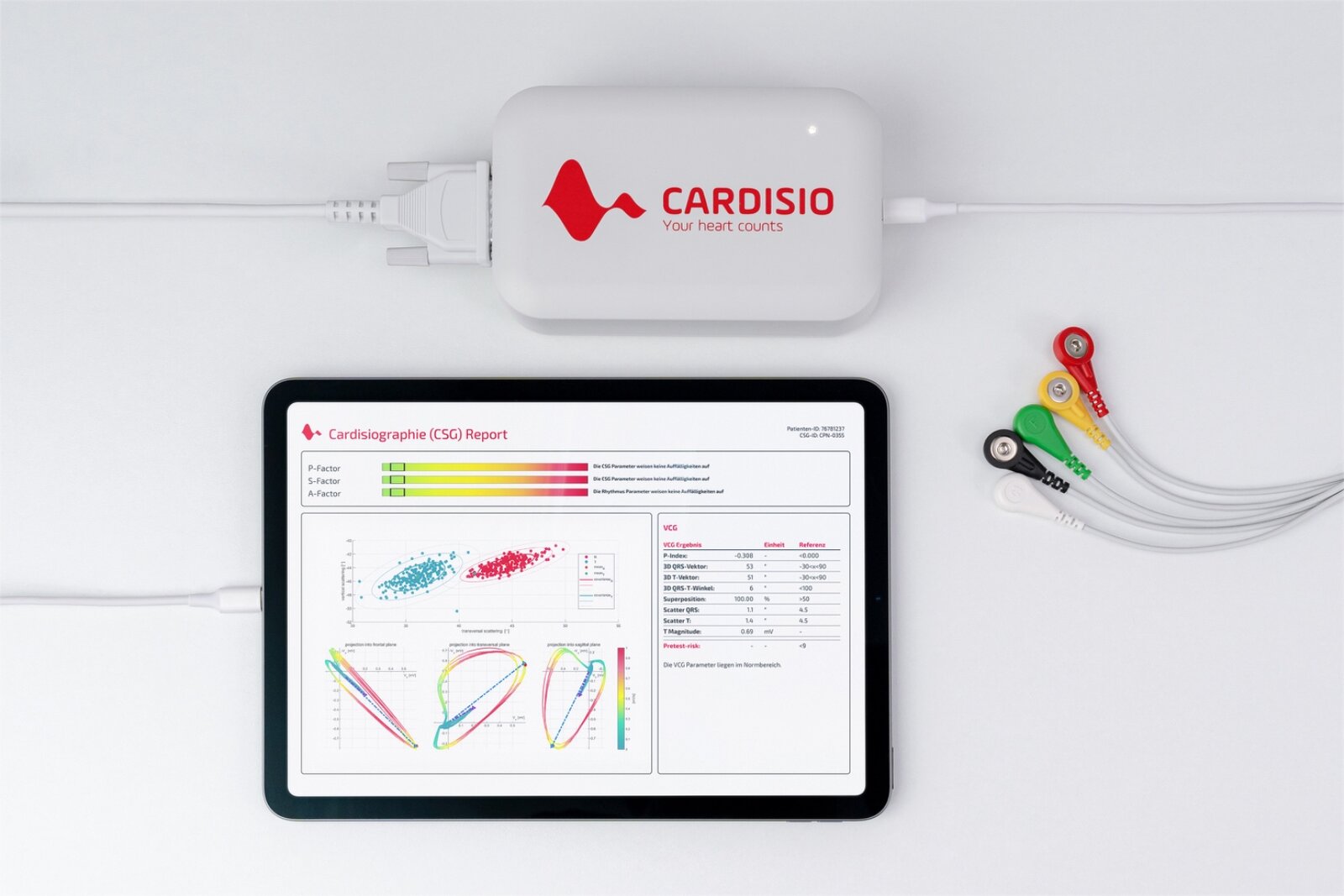
The standard ECG was patented in 1924. Cardisiography is the first commercial cardiac screening tool to combine 3D vectorcardiography, signal optimization and deep learning, delivering an accuracy and breadth of detection that the legacy 2D ECG simply cannot match. The technology has been validated against coronary angiography and independently evaluated within the NHS, where a community based trial across UK primary care delivered 73.8% sensitivity and 94.4% specificity in 628 patients.
- 2D recording, <45% sensitivity
- Limited electrical signal information
- Used mainly for arrhythmia diagnosis
- Full 360° 3D analysis of the heart's electrical excitation
- 3.2 million features per measurement
- Detects CAD, structural heart disease & arrhythmia
Three pathways. One screening test.
Coronary Artery Disease
Clogged arteries impede blood flow. Most common cardiac condition, and historically the most difficult to detect non-invasively.
Structural Heart Disease
Abnormalities in the heart's structure. Usually acquired via infection or prolonged strain, often only detected once damage has occurred.
Heart Arrhythmia
Flaws in the heart's electrical rhythm. Twelve types, many of them notoriously hard to capture, with conventional ECG accuracy near 40%.
From recording to result in about fifteen minutes.
Signal recording
Five electrodes are placed on the patient's torso, similar to an ECG. They rest still while the device captures the heart's full 3D electrical activity.
Cloud AI analysis
Recordings are streamed to the Cardisio cloud, where proprietary AI processes 3.2 million features and 290 parameters per measurement.
Medical consultation
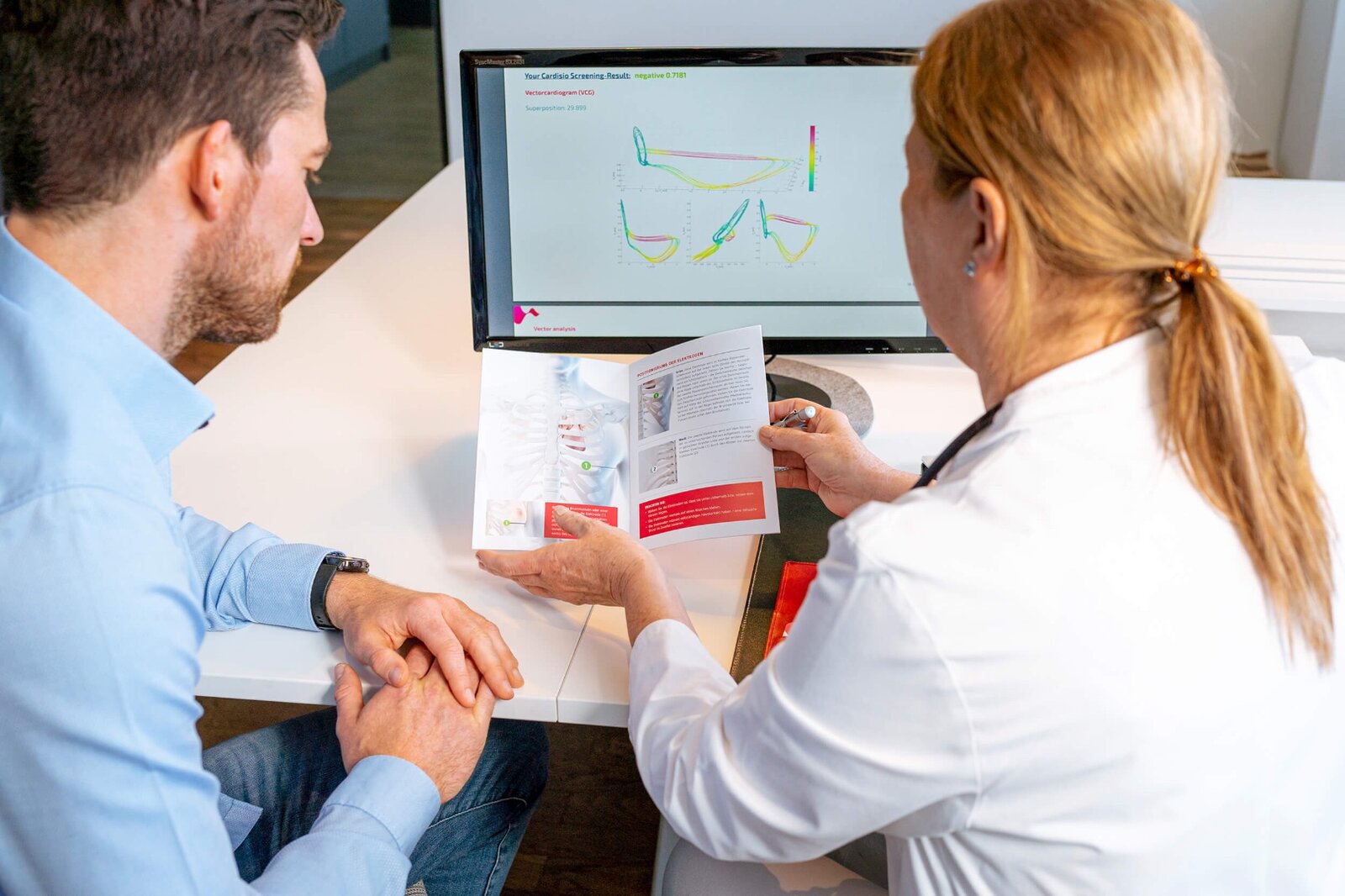
A web-based CSG report is delivered to the medical professional in real time. They discuss findings with the patient and initiate next steps.

Billions of bio-parameters, continuously learning.
Cardisio's models are trained on one of the world's largest cardiac signal repositories. Every measurement strengthens the platform, improving sensitivity and unlocking new clinical applications.
Working with the best in every market we enter.

Exclusive distribution across four strategic territories.
Greece
Bahrain
Saudi Arabia
India
Everything you need to know about working with Bioptive.
What is Cardisiography and how does it differ from a standard ECG?
How long does a single screening take?
Which conditions can Cardisiography detect?
Is the technology clinically validated and CE-marked?
Independent NHS trial (SBRI Healthcare). A prospective cohort study run across three primary-care settings in the West Midlands (GP practice, in-pharmacy and outreach pharmacy) recruited 628 asymptomatic, elevated-risk adults. The Cardisio test delivered a sensitivity of 73.8%, specificity of 94.4%, PPV of 80.0% and NPV of 90.4%, a strong correlation with clinical decisions for secondary-care referrals (p<0.001), and an 88% Net Promoter Score. Modelled cost savings for the NHS were estimated at £9.7m over five years in the West Midlands alone, with the potential to scale to roughly £400m nationally. Published in BJGP Open (2025) and summarised in the NHS SBRI Healthcare report.
Selected peer-reviewed and conference studies on Cardisiography:
- Multicenter validation against coronary angiography, Journal of Electrocardiology, 2020. 595 patients; sensitivity 97.2% (male) and 90.2% (female), specificity 76.1% and 74.4%, overall accuracy 90.7% and 82.5%.
- Sana Heart Center Cottbus validation study, 106 patients; sensitivity 95.4%, specificity 90.0%, PPV 97.6% (Erkenov, Stankowski, Grimmig et al.).
- 5-lead 3D-VCG AI vs. 12-lead ECG, DGK Herztage 2024, 287 patients; 75% sensitivity and 100% specificity for ECG abnormalities.
- 91st German Cardiac Society Annual Meeting, 2025, 280 patients; reduced LV-EF detected with 80.0% sensitivity, 85.7% specificity, 82.9% accuracy; LVH detected with 74.5%, 68.6%, 73.6%.
- American Heart Association Scientific Sessions, 2023: validation of AI-based 5-lead 3D vectorcardiography against the 12-lead ECG. High correlation, low bias (Circulation. 2023;148:A16473).
- European Society of Cardiology Congress, 2023: HDZ-NRW and Mediacc comparison of CSG with CVRF score in 407 patients; NPV 91%, CSG superior to CVRF score.
- Bad Oeynhausen Heart and Diabetes Center: CSG vs. myocardial SPECT; NPV 98% for ruling out coronary heart disease.
Who uses Cardisiography in practice?
How does a clinic or hospital partner with Bioptive?
Where is Bioptive headquartered and where do you operate?
Bringing breakthrough cardiac care to your clinic, hospital or network.
Whether you're a healthcare provider, an institutional partner or a journalist, we'd be delighted to hear from you.
1082 Nicosia, Cyprus